|
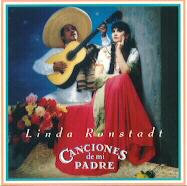
Canciones de mi Padre (1987)Lyrics as performed by Linda Ronstadt |
|
|
Canciones de mi Padre (1987)Lyrics as performed by Linda Ronstadt |
Por Un Amor
Los Laureles
Hay Unos Ojos
La Cigarra
Tú Sólo Tú
Y Andale
Rogaciano El Huapanguero
La Charreada
Dos Arbolitos
Corrido De Cananea
La Barca De Guaymas
La Calandria
El Sol Que Tú Eres
Por Un Amor

written by Gilberto Parra

Por un amor
Me desvelo y vivo apasionada;
Tengo on amor
Que en mi vida dejó para siempre amargo dolor.

Pobre de mí
Esta vida mejor que se acabe
No es para mí...

Pobre de mí (ay corazón...)
Pobre de mí (no sufras más...
Cuánto sufre mi pecho
Que late tan solo por ti.

Por un amor
He llorado gotitas de sangre del corazón,
Me has dejado con el alma herida
Sin compasión...

     I learned this ballad by Gilberto Parra
     from the singing of Lucha Reyes, who is
     a cornerstone of Mexican female vocal
     tradition.  She recorded a most charming
     version of it in the 1930's.    L.R.
|
For A Love written by Gilberto Parra For a love I can't sleep and I live full of passion I have a love That left forever in my life a bitter pain Poor me This life would be better if it would end It's not for me. Poor me (Ay, my heart... Poor me (don't suffer any more... How much my suffering in my breast That throbs so alone for you. For a love I have cried little drops of blood from my heart, You have left me with a wounded soul Without compassion... © 1942 Hnos. Marquez S.A. (EDI MUSA) All rights controlled by Vandar Music Co. (ASCAP) |
Los Laureles

written by José López

¡Ay, qué laureles tan verdes!
¡Qué rosas tan encendidas!
Si piensas abandonarme mejor quitame la vida;
Alza los ojos a verme
Si no estás comprometido.

Eres mata de algodón
Que vives en el capullo;
Ay, qué tristeza me da
Cuando te llenas de orgullo
De ver a mi corazón
Enredado con el tuyo!

Eres rosa de castilla
Que sólo en mayo se ve
Quisiera hacerte un invite,
Pero la verda no sé
Si tiene quién te lo evite,
Mejor me separaré.

Por "ai" va la despedida,
Chinito por tus quereres
La perdición de los hombres
Son las benditas mujeres;

Y aquí se acaban cantando
Los versos de los laureles.

     This ranchera is a standard for all
     mariachis and dates back to the 1920's
     or 1930's.  It is supposed to have been
     written by Consuelo Velásquez; it was
     common, especially during the Mexican
     Revolution in 1910, for women to write
     songs and include the couplets that men
     customarily used.  This would explain the
     line, la perdición de los hombres son las
     maldites mujeres (cursed women), in the
     original version.    L.R.
|
The Laurels

written by José López

Ay, how green the laurels are!
What fiery roses!
If you're thinking of leaving me better
    to take away my life;
Lift your eyes to look at me
If you are not engaged to be married.

You are a sprig of cotton
That lives in the bud;
Ay, what sadness I feel
When you fill yourself with haughtiness
Upon seeing my heart
Entangled with yours!

You are a rose from Castille
That can only be seen in May
I would like to invite you,
But in truth I don't know
If there is someone in the way
Better that I go away.

So goes the farewell
Chinito, to your affections
The Blessed women
Are the ruin of men;
And here ends the singing
Of the verses of the laurels


© Blackhawk Music (BMI)
|
Hay Unos Ojos

written by Rubén Fuentes

Hay unos ojos que si me miran
Hacen que mi alma tiemble de amor
Son unos ojos tan primorosos
Ojos más lindos no he visto yo.

¡Ay!, quien pudiera mirarse en ellos
¡Ay!, quien pudiera besarlos más
Gozando siempre de sus destellos
Y no olvidarlos nunca jamás.

Y todos dicen que no te quiero
Que no te adoro con frenesí
Y yo les digo que mienten, mienten
Que hasta la vida daría por ti.


     According to Mendoza, this ia a danza
     habanera, a folk dance reflecting the Cuban
     influence which was strong in Mexico
     following the revolution of 1910. The
     rhythm of this waltz has an elegantly
     graceful nineteenth century Creole cadence.
                                           L.R.
|
There Are Some Eyes written by Rubén Fuentes There are some eyes which if they look at me Make my soul tremble with love There are some eyes so exquisite Prettier eyes I have never seen. Ay!, who could look at himself in them Ay!, who could kiss them more Enjoying always their sparkle And never ever forgetting them. And everyone says that I don't love you That I don't adore you with a frenzy And I tell them that they lie, they lie That I would even give my life for you. © 1987 Normal Music / BMI |
La Cigarra
written by Ray Pérez y Soto
Ya no me cantes cigarra
Que acabe tu sonsonete
Que tu canto aquí en el alma
Como un puñal se me mete
Sabiendo que cuando cantas
Pregonado vas tu muerte.
Marinero marinero
Dime si es verdad que sabas
Porque distinguir no puedo
Si en el fondo de los mares
Hay otro color más negro
Que el color de mis pesares.
Un palomito al volar
Que llevaba el pecho herido
Ya casi para llorar
Me dijo muy afligido.
Ya me canso de buscar
Un amor correspondido.
Bajo la sombra de un árbol
Y al compás de mi guitarra
Canto alegre este huapango
Porque la vida se acaba
Y quiero morir cantando
Como muere la cigarra.
This huapango was written by
Ray Perez y Soto. It was recorded in the
1940's by Jorge Negrete when he sang with
the Trio Calaveras, and more recently by
Lola Beltran, who is, in my opinion, the
greatest voice to ever come out of Mexico. |
The Cicada Don't sing to me anymore, cicada Let your singsong end For your song, here in the soul Stabs me like a dagger Knowing that when you sing You are proclaiming that you are going to your death Sailor, sailor Tell me if it is true that you know Because I cannot distinguish If in the depth of the seas There is another color blacker Than the color of my sorrows. A little dove upon flying Bearing a wounded breast Was about to cry And told me very afflicted I'm tired of searching for A mutual love. Under the shade of a tree And to the beat of my guitar I sing this "huapango" happily Because my life is ending And I want to die singing Like the cicada dies. © 1958 Promotura Hispana Americana de Música S.A. Copyright renewed, all rights controlled by Peer International Corp / BMI |
Tú Sólo Tú

written by Felipe Valdez Leal

Miro como ando mujer
Por tu querer
Borracho y apasionado
No más por tu amor.

Mira como ando mi bien
Muy dado a la borrachera
Y a la perdición.

Tú sólo tú
Has llenado de luto mi vida
Abriendo una herida en mi corazón

Tú... tú sólo tú
Eres causa de todo mi llanto
De mi descanto y desesperación.

Sólo tu sombra fatal
Sombra de mal
Me sigue por dondequiera
Con ostinación
Y por quererte olvidar
Me tiro a la borrachera
Y a la perdición.


     Tu Solo Tu is a famous cancion ranchera
     written by Felipe Valdez Leal. It was sung
     by Pedro Infante as well as Las Hermanas
     Padillas in the late 1930's, early 1940's.
     A more contemporary version exists by
     Maria Dolores Pradera, a favorite singer
     of mine, who is from Spain.    L.R.
|
You Only You Look how I'm going around, woman Because of your love Drunk and impassioned Only for your love. Look how I'm going around, my love Given to drinking And utter ruin. You... only you Have filled my life with sorrow Opening a wound in my heart You... you only you Are the cause of all my weeping Of my disillusionment and desperation. Only your fatal shadow Shadow of evil Stubbornly follows me Wherever I go And by trying to forget my love for you I throw myself into drunkenness And utter ruin. © 1949 Promotura Hispana Americana de Música S.A. Copyright renewed, all rights controlled by Peer International Corp / BMI |
Y Andale

written by Minerva Elizondo

Qué dirán los de tu casa
Cuando mi miran tomando,
Pensarán que por tu causa
Yo me vivo emborrachando,
Y ándale...

Pero si vieras
Como son lindas estas borracheras
Y ándale...

(Coro)
Pero hasta cuando
Dejan tus padres de andarte cuidando
Y ándale...

Cada vez que vengo a verte
Siempre me voy resbalando;
O es que tengo mala suerte
O es que me está lloviznando
Y ándale...

Pero si vieras
Seco mi chaco en mi higuera floreando
Y ándale...

(Coro)
Pero si cuando
Seco mi chaco en mi higuera floreando
Y ándale...

Me dices que soy un necio
Porque me ando emborrachando,
Y a pesar de tus deprecios,
Yo quiero seguir tomando, y ándale

Pero si vieras
Como son lindas estas borracheras...
Y ándale...

(Coro)
Pero que bellas
Paso las horas vaciando botellas
Y ándale.


     I am a renowned teetotaler, but I love
     this drinking song.  The use of the word
     chaco is unusual (it has been defined as
     organ meat of hunted fowl) and the exact
     meaning of the refrain it appears in
     probably has a double connotation. I
     have opted to sing it here with my niece,
     Mindy, who at 17 brings a lovely innocence
     to this tale of gleeful debauchery.
                                     L.R.
|
Get On With It What will they say those in your house When they see me drinking, Will they think that it's on account of you That I live my life drinking Get on with it. But if you could see How pretty these binges are Get on with it. (Chorus) But until whenever Your parents stop protecting you Get on with it. Each time that I come to see you I'm always slipping; Is it that I have bad luck Or is it that it's drizzling on me, Get on with it. But if you could see Me dry my chaco in my flowering fig tree grove Get on with it. (Chorus) But if ever I dry my chaco in my flowering fig tree grove, Get on with it. You say that I'm a fool, Because i'm always getting drunk, And in spite of your scorn, I want to keep on drinking, Get on with it. But if you were to see How pretty these binges are, Get on with it. (Chorus) But how beautiful Are the hours I spend emptying bottles, Get on with it. © 1951 Brandila Musical All rights controlled by Vandar Music Co. (ASCAP) |
Rogaciano El Huapanguero

written by Valeriano Trejo

La huasteca está de luto
Se murió su huapanguero.
Ya no se oye aquel falsete
Que es el alma del trovero.

Rogaciano se llamaba
Rogaciano el huapanguero
Y eran sones de la sierra
Las canciones del trovero.

La Azucena y la Cecilia
Lloran, lloran sin consuelo
Malagueña Salerosa
Ya se fue su pregonero.

El cañal está en su punto
Hoy comienza la molienda
El trapiche está de duelo
Y suspira en cada vuelta.

Por los verdes cafetales
Más allá de aquel potrero
Hay quien dice que de noche
Se aparece el huapanguero.

La Azucena y la Cecilia
Lloran, lloran sin consuelo
Malagueña Salerosa
Ya se fue su huapanguero.

     This moody, beautifully haunting huapango
     was written by Valeriano Trejo, who, according
     to Rubén Fuentes, is a school teacher.
     Fuentes recorded it in the 1950's with Miguel
     Aceves Mejía, another hero of mine. It is one
     of the songs my brothers and I used to try to
     harmonize when we were growing up, so I asked
     them to sing it with me on the record.  After
     knowing it for so long, we've finally learned
     all the words!
       It is a tale of the huasteca, a region north
     of Vera Cruz, Mexico, where the sones huastecos
     (usually called huapangos) are sung. (See notes
     on La Calandria for definition of sones.) A
     huapanguero is a singer of huapangos. The style
     is characterized by falsetto breaks in the
     singing.                           L.R.
|
Rogaciano La huasteca* is in mourning Its huapanguero has died You can no longer hear that falsetto Which is the soul of the troubadour. Rogaciano he was called Rogaciano the huapanguero* And they were sones of the sierra mountains The songs of the troubadours. Azucena and Cecilia Are crying, crying inconsolably Malagueña Salerosa* Their bard has gone. The cane is ready Today begins the milling The sugar mill is in mourning And sighs with each turn. In the green coffee plantations Far beyond that pasture There are those who say that in the nighttime The huapanguero appears. Azucena and Cecilia Are crying, crying inconsolably Malagueña Salerosa* Their bard has left. *huasteca: a region huapanguero: a singer of huapangos © 1955 Promotora Hispana Americana de Música S.A. |
La Charreada

written by Felipe Bermejo

Ay... qué rechula es la fiesta
La fiesta charra, fiesta del sol.

Don... de los charros valientes
Dan cos sus cantos la evocaión.

El... jaripeo y su festejo
Que huele a surco y a tradición

Remedo de la faena
Más admirada de mi nación

Bonito es el jaripeo
Y cuánto su animación
Yo quiero montarle a un toro
Pa' que me mire mi amor.

Upale y upa liu
upale y upa liu

     A charreada is similar to a rodeo but
     has slightly different events more par-
     ticular to the style of the Charro, or
     gentleman cowboy. It is very colorful
     because the men always compete wearing
     their elegant Charro suits, the basis of
     the mariachi costume. The grand entry
     (el jaripeo) features the ladies riding
     their beautiful horses sidesaddle. It
     also includes the singing of the tra-
     ditional rancheras that I love so much.
     My sister Suzi used to say that the real
     test of a good singer was if he or she
     could support a tone on horseback, as
     she heard the singers do in the
     charreada. She even learned to ride her
     horse sidesaddle. If I can get her to
     teach me how to do it, maybe I'll be
     able to sing sidesaddle in a charreada
     one day - a cherished dream of mine.
                                      L.R.
|
The Charreada How very pretty is this fiesta The charro fiesta, fiesta in the sun Where the valiant charros Evoke such feeling with their songs The festive grand entry Smacks of tradition and the furrows of the earth It resembles the action of the bullfight So admired in my nation Pretty is the grand entry and how great its excitement I want to ride the bull So that my love can see me. upale y upa liu © 1951 Promotora Hispana de Mexico S.A. Copyright renewed. All rights controlled by Peer International Corp/ BMI |
Dos Arbolitos

written by Chucho Martinez Gil

Han nacido en mi rancho dos arbolitos,
Dos arbolitos que paracen gemelos,
Y desde mi casita los veo solitos
Bajo el amparo santo y la luz del cielo.

Nunca están separados uno del otro
Porque así quiso Dios que los dos nacieran,
Y con sus mismas ramas se hacen caricias
Como si fueran novios que se quisieran.

Arbolito, arbolito, bajo tu sombra
Voy a esparar que el día cansado muera,
Y cuando estoy solito mirando al cielo
Pido pa' que me mande una compañera.

Arbolito, arbolito, me siento solo
Quiero que me acompañes hasta que muera.

     My father loves this song so much he
     once offered my brother Mike $50 to
     learn to sing it. I'm afraid I beat him
     to it but I haven't received a dime. In
     view of the circumstances, the only
     proper thing to do was invite him and
     my brother Pete to sing the trio with
     me. They got scale. It was written by
     Chucho Martinez Gil and made popular by
     Pedro Infante in the late 1930's or
     early 1940's.                 L.R.
|
Two Little Trees Two little trees have been born on my ranch Two little trees that look like twins And from my house I see them all alone Under the holy protection and light from the heavens. They are never separated, one form the other Because that is how God wanted for the two of them to be born, And with their own brances they caress each other As if they were sweethearts who loved each other. Little tree, little tree, under your shade I'm going to wait until the end of this tiring day, And when I'm all alone looking to the sky I'm going to ask Heaven to send me a companion. Little tree, little tree I feel alone I want you to accompany me until I die. © 1977 Unimúsica Inc./ASCAP |
Corrido De Cananea

written by Rubén Fuentes

Voy a dar un pormenor
De lo que a mí me ha pasado,
Que me han agarrado preso
Siendo un galla tan jugado.

Yo me fui para Agua Prieta
A ver quién me conocía
Y a las once de la noche
Me aprehendió la policia.

Me aprehendieron los gendarmes
Al estilo americano,
Como un hombre de delito,
Todos con pistola en mano.

La cárcel de Cananea
Está situada en una Mesa
Y en ella fui procesado
Por causa de mi torpeza.

Despedida no la doy
Porque no la traigo aquí
Se la deje al santo niño
Y al señor de Mapimi.


     This beautiful corrido (story song)
     is a favorite of my brother Pete who is
     el jefe de policia in Tucson. He tells
     a story about singing this in his
     police car with one of the regular
     drunks that he would pick up and either
     escort to jail or drive home, depending
     on how much mischief the man had been
     up to. It is a song from Sonora sung
     during the Revolutionary war, and I
     remember my dad and his great compadre,
     Felipe, singing its many verses late
     into the night with a good bottle of
     mexcal for the accompaniment.  L.R.
|
Ballad of Cananea I'm going to detail What happened to me, That they have taken me prisoner Being a well played rooster. (Even though I've been around and should have known better.) I went to Agua Prieta To see if I had a reputation there And at 11:00 at night The police apprehended me. They arrested me In the American style, As though I were a criminal All of them with pistol in hand. The jail of Cananea Is situated on a plateau And in it I was processed On account of my stupidity. I give you no farewell For I don't have it with me Leave it to the Holy Child And to the Lord of Mapimi. © 1987 Normal Music/ BMI |
La Barca De Guaymas

written by Rubén Fuentes

Al golpe del remo se agitan las olas
Ligera la barca
Al ruido del agua se ahonda mi pena
Solloza mi alma.
Por tantos pesares, mi amor angustiado
Llorando te llama
Y te hallas muy lejos... y sola,
  muy sola
Se encuentra mi alma.

Alegre viajero que tornas al puerto
De tierras lejanas
Que extraño piloto condujo tu barca
Sin vela y sin ancla
De qué región vienes, que has hecho
  pedazos
Tus velas tan blancas.
Y fuiste cantando
Y vuelves trayendo, la muerte en el alma

Yo soy el marino
Que alegre de Guaymas, salió una mañana
Llevando en mi barca como ave piloto
Mi dulce esperanza.
Por mares ignotos
Mis santos anhelos hundió la borrasca
Por eso están rotas mis penas
Y traigo la muerte en el alma.
Te fuiste cantando
Y hoy vuelves trayendo
La muerte en el alma.

     My father used to play this graceful
     song on the piano during lazy Sunday
     afternoons in our home in Tucson.  It
     took me about 30 years to finally get
     around to asking him what it was
     called.  How we take these treasures
     for granted! It was written around 1916
     in Cosala, Sinaloa, on the west coast
     of Mexico.  The musicologist Adrian
     Trevino thinks that this song was a
     salon piece, possibly a valse asentado
     (slow waltz).  Its salon origins are
     suggested by the unusual poetic struc-
     ture and expression; each thought is
     in three parts of six syllables each.
                                      L.R.
|
The Boat from Guaymas At the stroke of the oar the waves are agitated Light is the boat At the noise of the water my sorrow gets deeper And my soul is sobbing. Because of so many troubles My anguished love cries out to you You are very far away And my soul finds itself alone, all alone. Tired traveler who returns to the port From faraway lands What strange pilot sailed your boat Without a sail, without an anchor From where do you come, that you have torn to pieces Your sails so white. You left singing And today you return, bringing death in your soul. I am the sailor who happily from Guaymas Left one morning Carrying in my boat, like a guiding bird, My sweet hope Through unknown seas The storm overwhelmed my sacred yearnings That's why my efforts are broken And I bring death in the soul. You left singing And today you return Bringing death in your soul. © 1987 Normal Music/ BMI |
La Calandria

written by Nicando Castillo

Yo soy como la calandria
Que para formar su nido
Siempre busca rama fuerte
Para no verlo caído

Otros son como el venado
Que por listo y presumido
Cuando anda de enamorado
Lo matan desprevenido

Ay...Ay...Ay...Ay...
Las nubes van por el cielo
Los pescados por el agua
El oro está bajo el suelo
Y el amor en las enaguas

Mi prieta linda
Que voy a hacer
Si tú me quitas
Este querer.

De que les sirve a los hombres
Presumir de valentones
Si cuando están en su casa
Se les caen los pantalones

También sucede otra cosa
Con los que son fanfarrones
Cuando ven la cosa en serio
Les pasa algo en sus calzones.

     This was probably originally a son
     jarocho from the early 1900's, but it
     is arranged here by Don Rubén in the
     style of the huasteca. The ethno-
     musicologist Dr. Stephen Loza describes
     a son (plural: sones) as a folk song
     and dance (usually danced with heels on
     a board) represented in different
     regions in Mexico.  Jarocho is the
     region of the Atlantic seaboard in
     Vera Cruz.                 L.R.
|
The Lark I am like the lark That in order to form its nest Always looks for a strong branch So that she won't see it fall. Others are like the deer Eager and presumptuous When it goes out to find love Is killed without warning. Ay...Ay...Ay...Ay... The clouds go through the sky The fish through the water The gold is under the ground And love is in the petticoats. My dark lovely one What am I going to do If you take this love Away from me. What good is it for men To put on airs If when they are at home Their pants fall down. Also another thing happens With those who are braggarts When they see the real thing Something happens to them in their breeches. © 1947 Promotora Hispana Americana de Música S.A.- Copyright renewed, all rights controlled by Peer International Corp./BMI |
El Sol Que Tú Eres

written by Daniel Valdez

Sol redondo y colorado
Como una rueda de cobre
De diario me estás mirando
De diario me miras pobre

(Coro)
Sol lo tú eres
Tan parejo
Para repartir tu luz
Habías de enseñarle al amo
A ser lo mismo que tú

Me miras con el arado
Luego con la rozadera
Una vez en la llanura
Y otra vez en la ladera.

     This exquisite ballad is in the
     public domain and relatively unknown.
     Don Rubén guessed that it might be
     very old, perhaps a hundred years or
     so. I first sang it with Danny Valdez
     in Corridos, a P.B.S. production
     directed by his brother Luis. Danny
     said that he learned it on the picket
     line with Teatro Campesino, helping
     to organize the farm workers with
     César Chávez.               L.R.
|
The Sun That You Are Sun, round and red Like a copper wheel Daily you are looking at me Daily you see me poor. (Chorus) Sun that you are So fair to everyone As you spread your light You should teach my boss How to be the same as you. You see me with the plow Later with the sickle One time on the plains And other time on the hillside. © 1987 Daniel Valdez Music/ BMI |